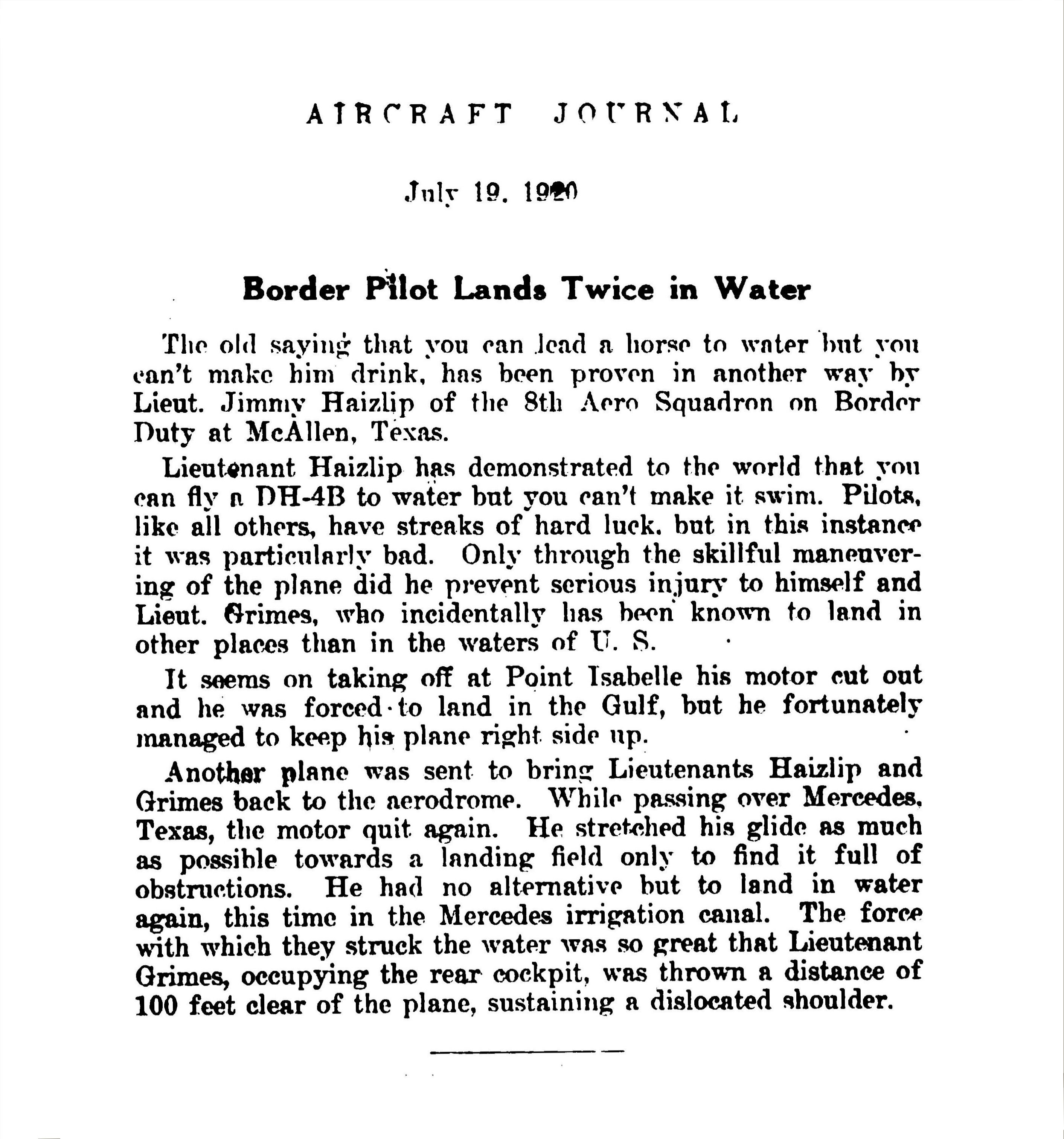
*Revolution
and disorder in Mexico and
trouble along the U.S.-Mexican border in March 1913 brought on the
hurried organization of the 1st Aero Squadron, the U.S. Army’s
first tactical unit equipped with airplanes. In 1916, the squadron
took part in General Pershing’s punitive expedition into Mexico
in
pursuit of Mexican revolutionist Pancho Villa. Difficulties along the
border continued while the United States was
at war in Europe. Mexican bandits often raided American ranches to
secure supplies, cattle, and horses, and in doing so sometimes killed
the ranchers. U.S. troops
stationed along the border shot raiders as they pursued them into
Mexico. The biggest clash came in August 1918, when more than 800
American troops fought some 600 Mexicans near Nogales,
Arizona.
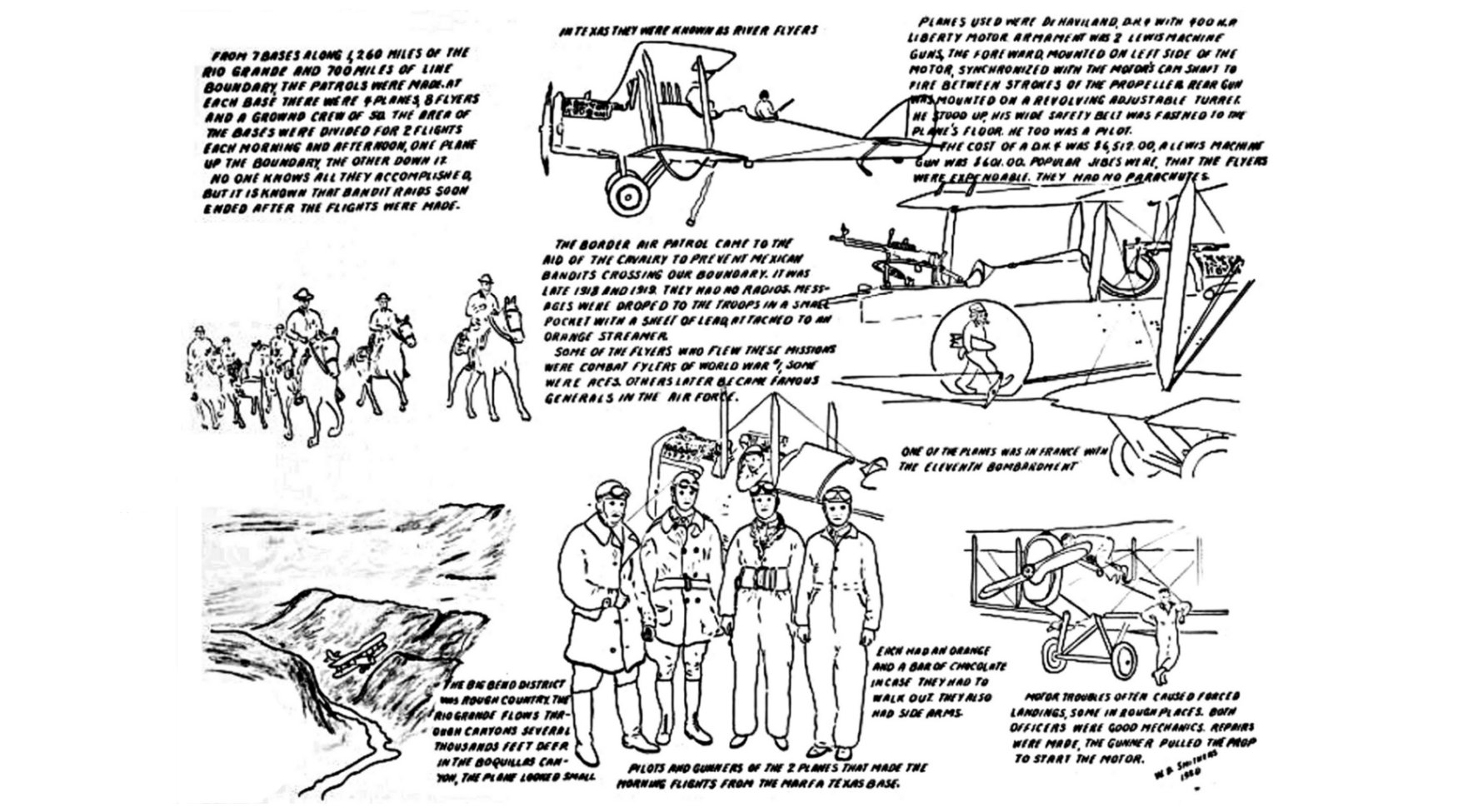
Border patrol was one of the many activities being
considered for the postwar Air Service. However, no aviation units
had been assigned to duty on the Mexican border, when a large force
of Villistas moved northward in June 1919 toward Ciudad Juarez,
Chihuahua, Mexico (opposite
El Paso, Texas), garrisoned by Mexican government forces. Maj. Gen.
DeRosey C. Cabell, Commanding General of the Southern Department,
received orders to seal off the border if Villa took Juarez. If the
Villistas tired across the border, Cabell was to cross into Mexico,
disperse Villa’s troops, and withdraw as soon as the safety of El
Paso was
assured. The General ordered Air Service men and planes from Kelly
and Ellington Fields, Texas, to Fort Bliss, near El Paso, for border
patrol American troops under Brig. Gen. James B. Erwin, Commander of
the El Paso District of the Southern Department, were on alert when
about 1,600 of Villa’s men attacked Juarez during the night of June
14/15, 1919. Stray fire from across the river killed an American
soldier and a civilian, and wounded two other soldiers and four
civilians. Around 3,600 U.S. troops
crossed into Mexico, quickly dispersed the Villistas, and returned to
the American side. Air
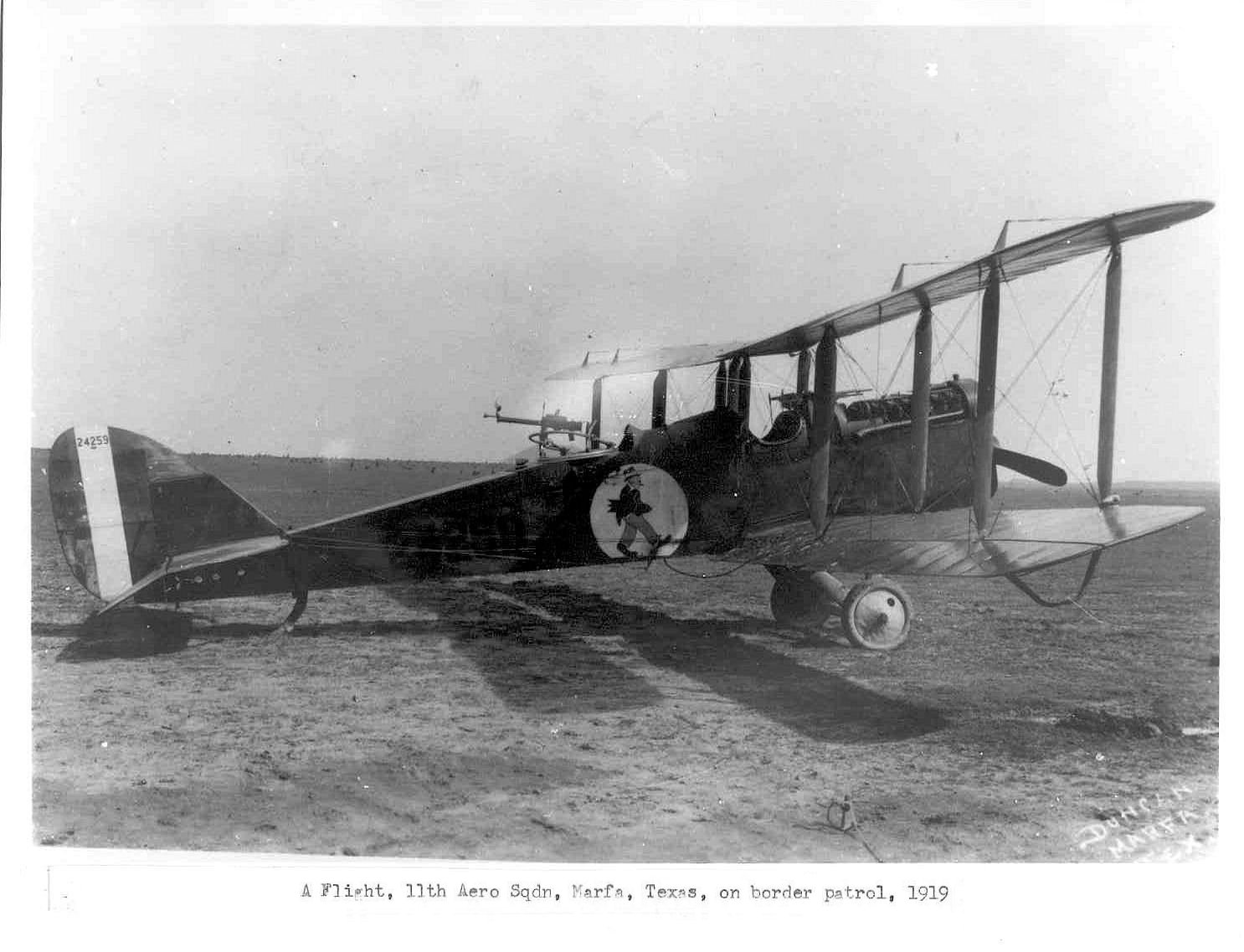
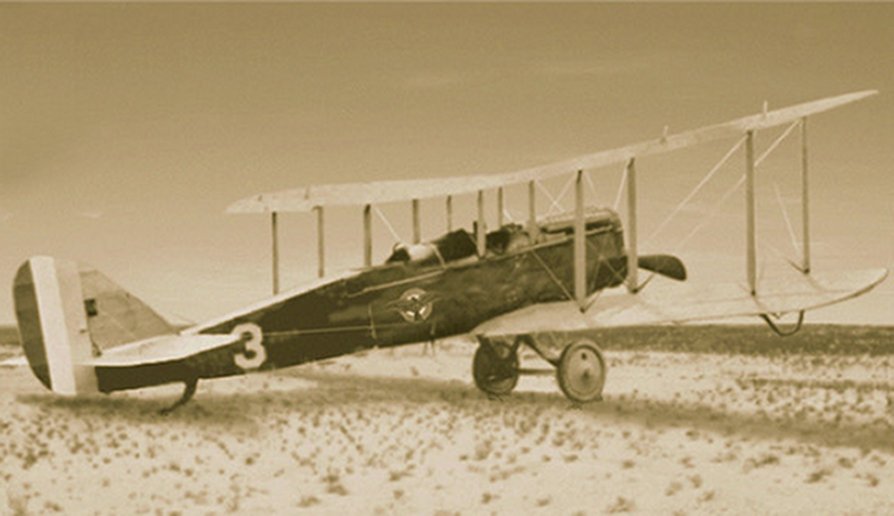
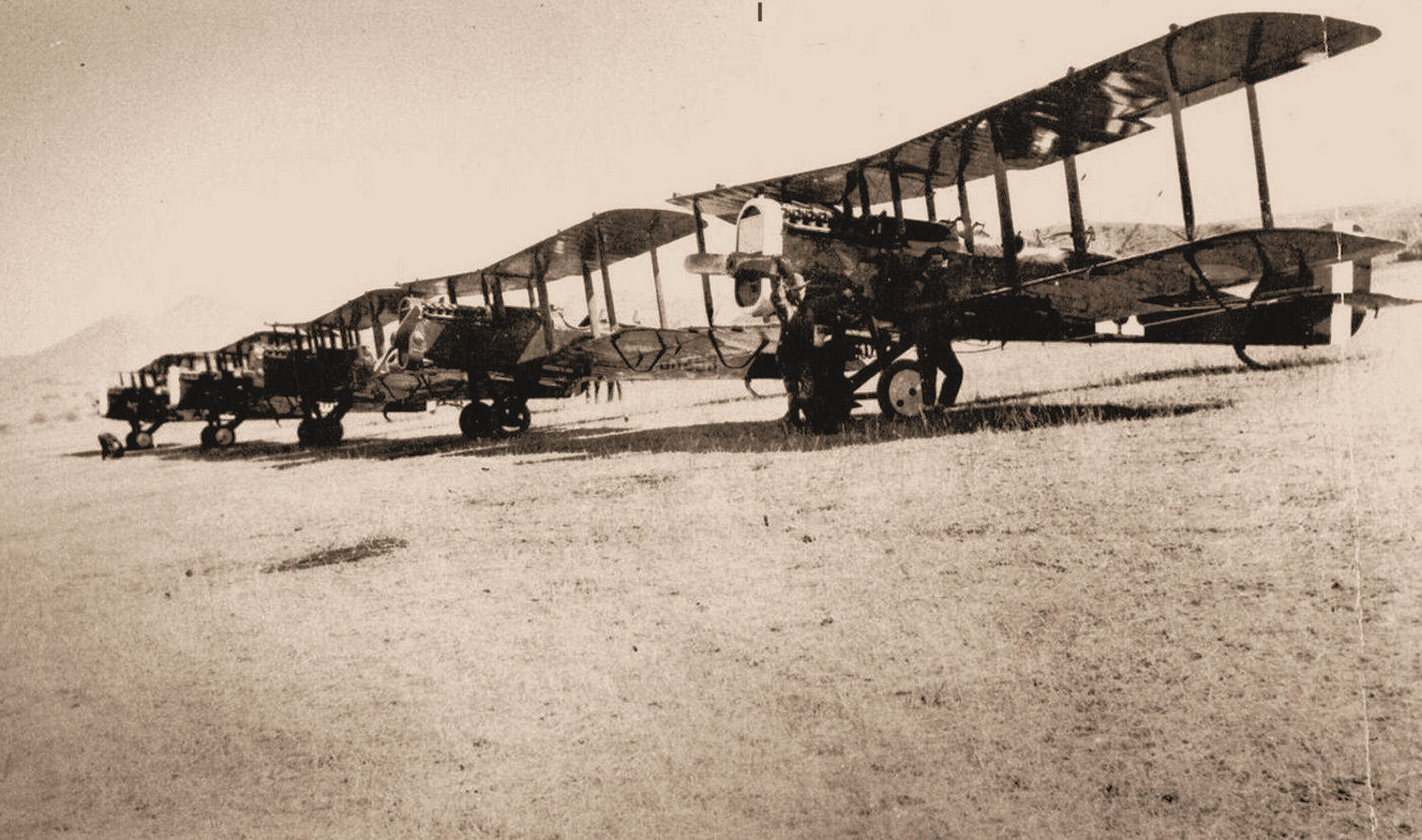
Service personnel with DH-4 aircraft began arriving at Fort
Bliss
on
June 15.
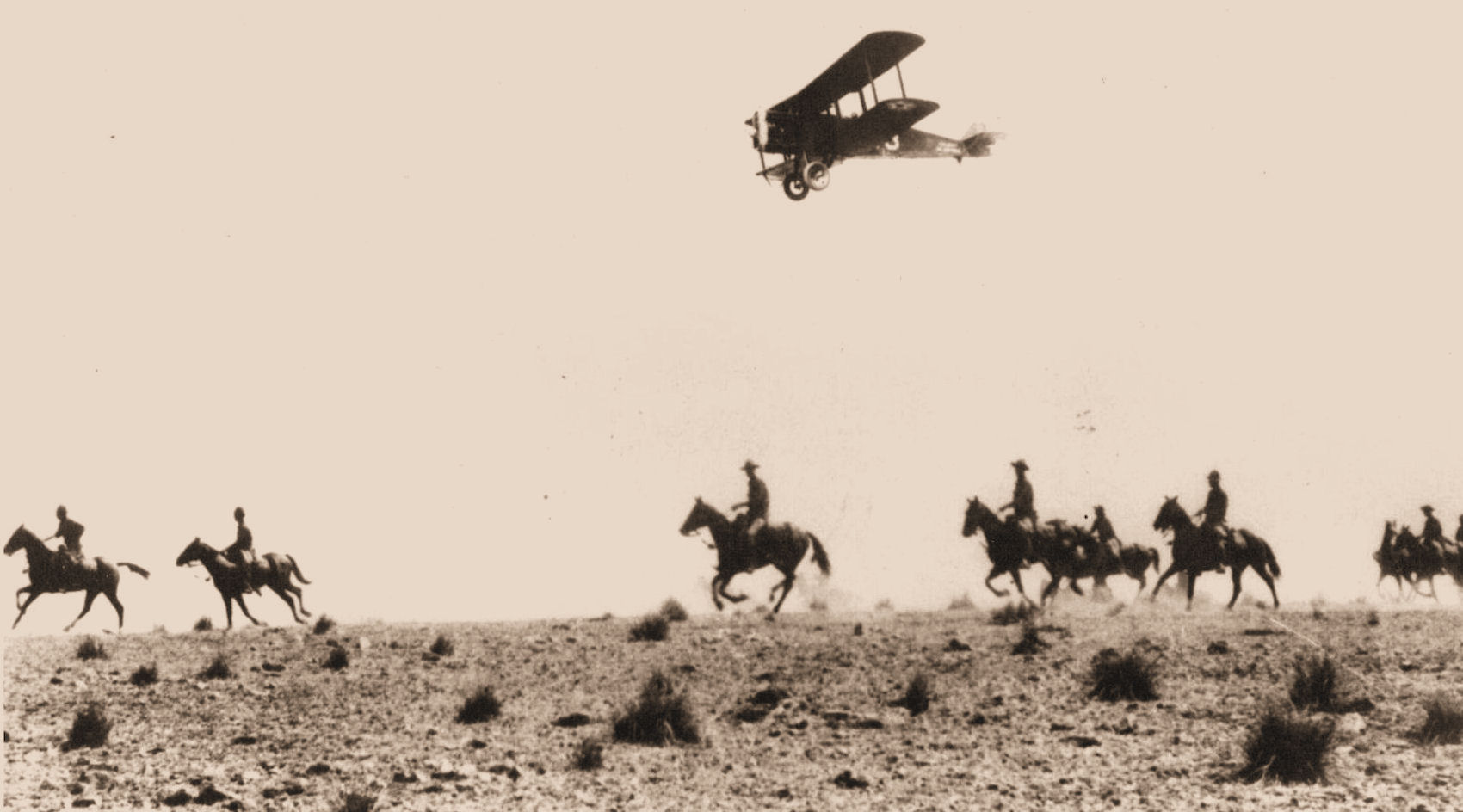
Maj. Edgar G. Tobin, an ace who had flown with the 103d Aero
Squadron in France, inaugurated an aerial patrol on the border on the
19th. By mid-September the force grew to 104 officers, 491 enlisted
men, and 67 planes from the 8th, 9th, 11th, 90th, and 96th squadrons.
In the summer of 1919, the Army planned to build at least nine aero
squadrons and one airship company for surveillance of the entire
border from the Gulf of Mexico to
the Pacific Ocean. The plan called for two observation squadrons (the
9th and 91st) of the Western Department to patrol eastward from
Rockwell Field, California, to the California-Arizona line. Three
surveillance squadrons (the 8th, 90th, and 104th) and four
bombardment squadrons (the 11th, 20th, 96th, and 166th) of the
Southern Department were to be distributed along the border from
Arizona to
the Gulf of Mexico. On July 1, 1919, the three surveillance squadrons
organized into the Army Surveillance Group headquartered at Kelly
Field. (This group became the 1st Surveillance Group in August 1919.)
In September the four bombardment squadrons formed the 1st Day
Bombardment Group, also with headquarters at Kelly. In addition the
1st Pursuit Group and its squadrons (27th, 94th, 95th, and 147th)
moved from Selfridge Field, Michigan, to Kelly at the end of August
to be available if needed. The three groups (surveillance, day
bombardment, and pursuit) comprised the 1st Wing at Kelly. Commanded
by Lt. Col. Henry B. Clagett, the wing became responsible for aerial
patrol of the border in the Southern Department. Also in August, work
started on a large steel hangar for an airship station at Camp Owen
Bierne, Fort Bliss.
The
Army soon scaled down the plan for border patrol. Although minor
incidents continued to occur, Pancho Villa never succeeded in
rebuilding his force. The major threat had been dispelled by the time
aerial patrol began.
From
January 1920 on, the patrol in the Southern Department was handled by
the 1st Surveillance Group which had moved its headquarters to Fort
Bliss
and
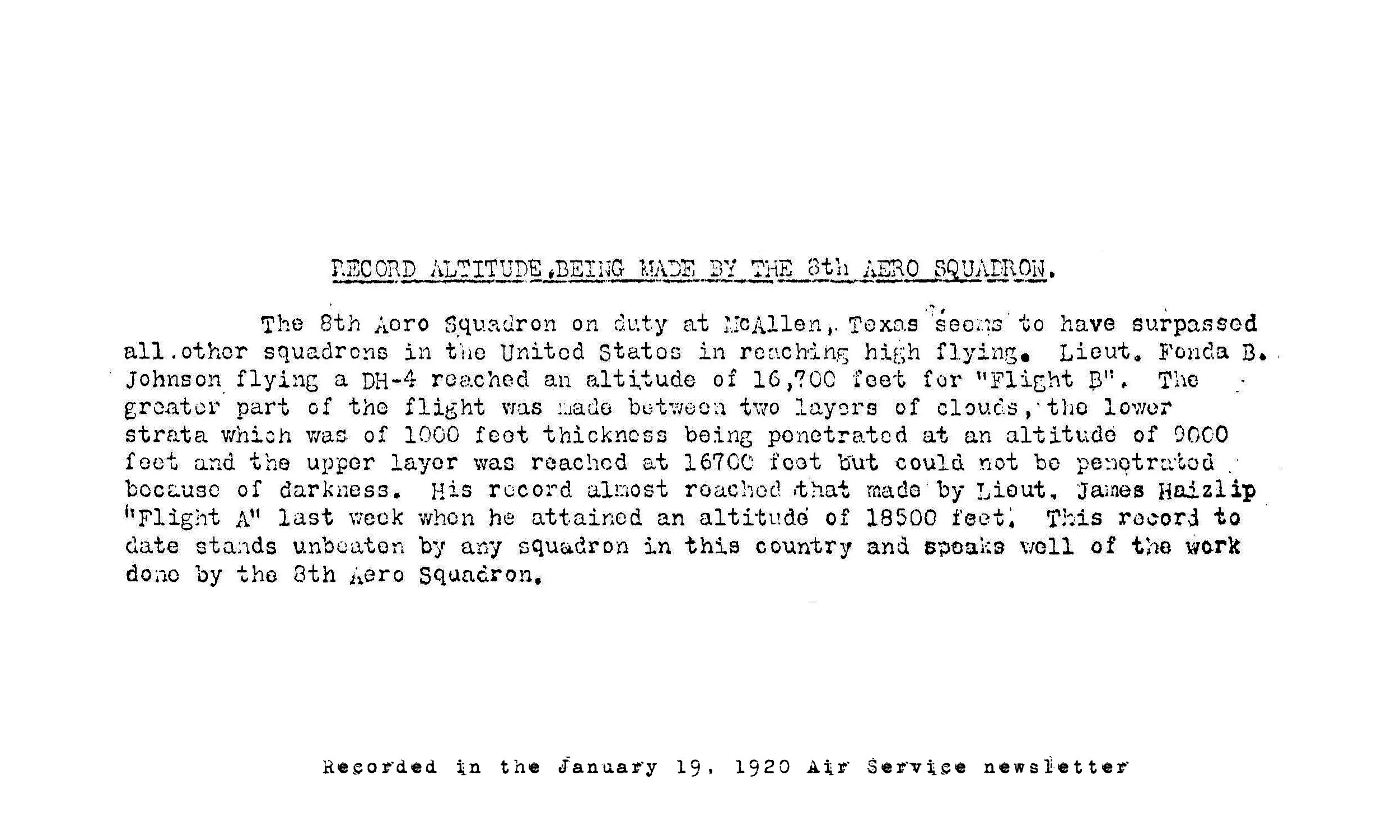
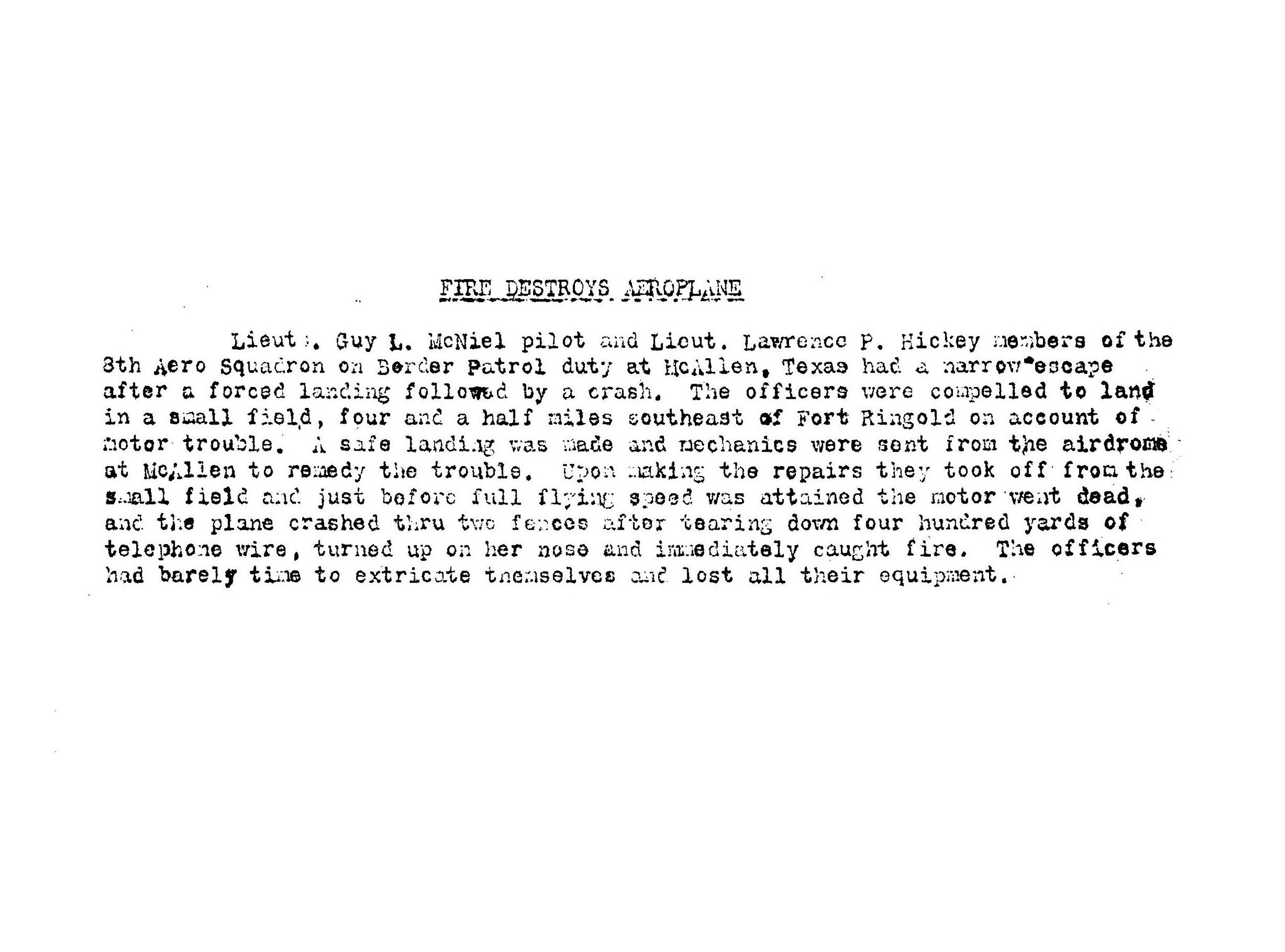
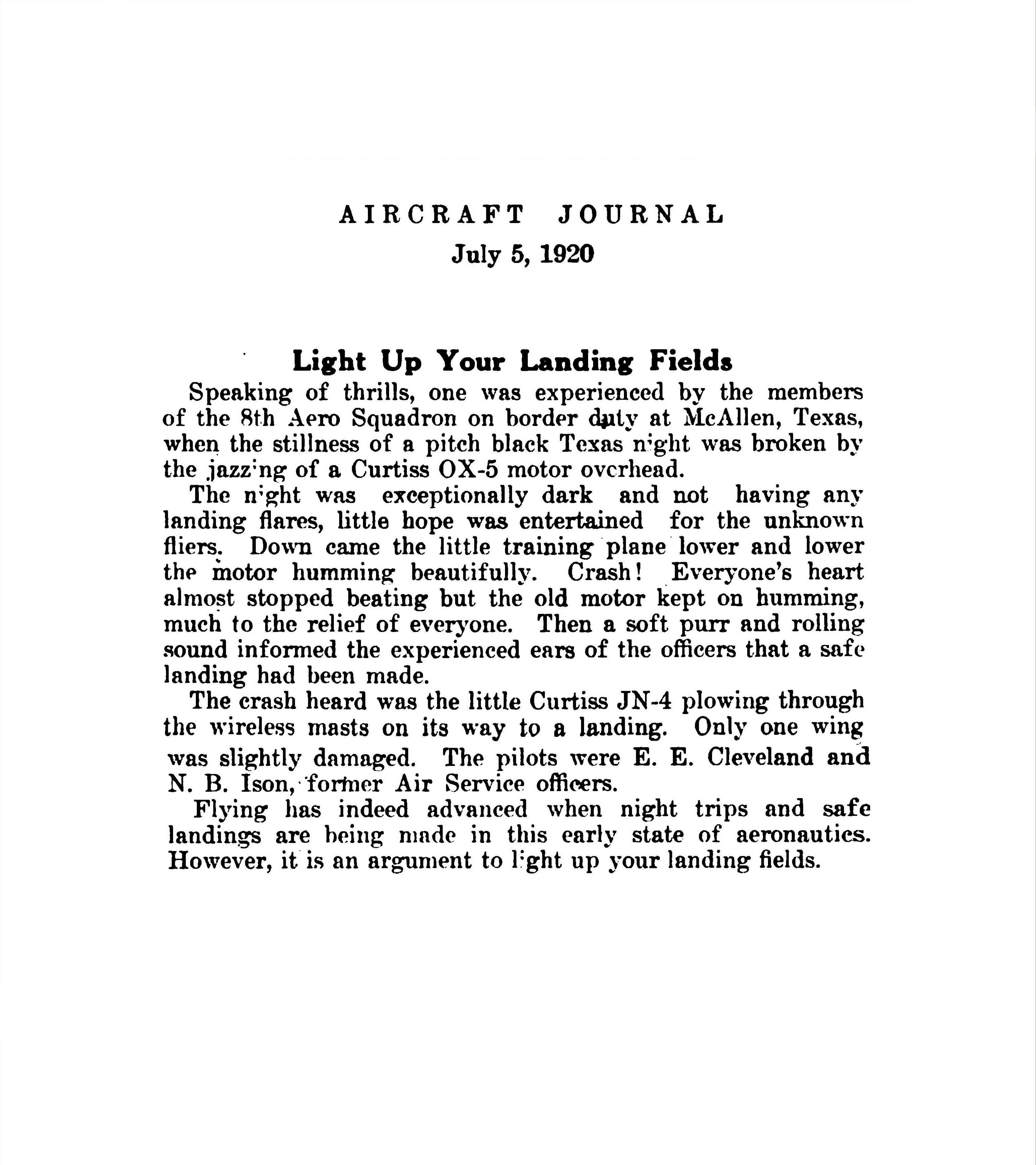
gained an extra squadron, the 12th. The group’s squadrons operated
in two flights, each patrolling a sector on either side of its
operating base. From the Gulf of Mexico westward,
the deployment was as follows:
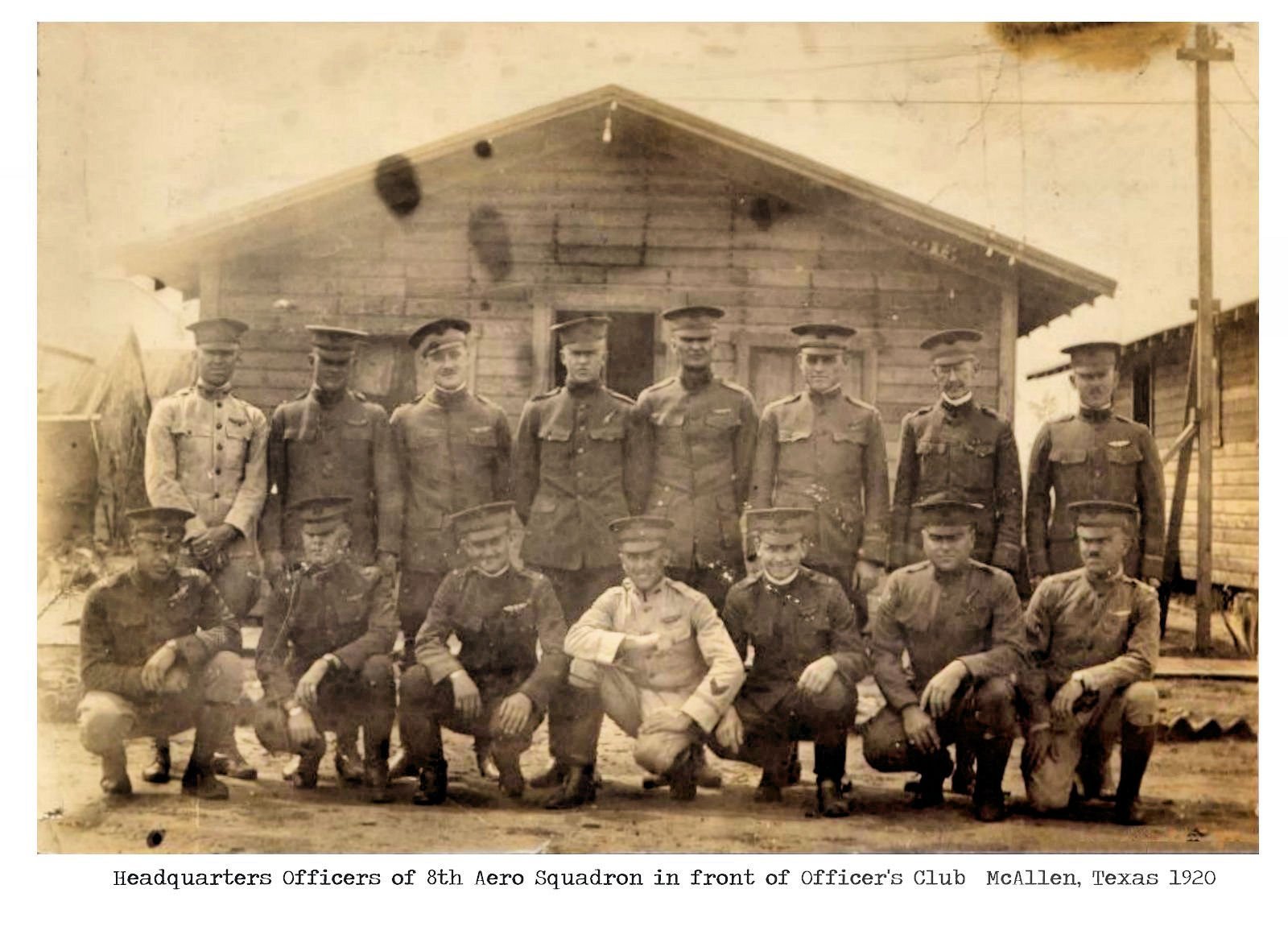
8th
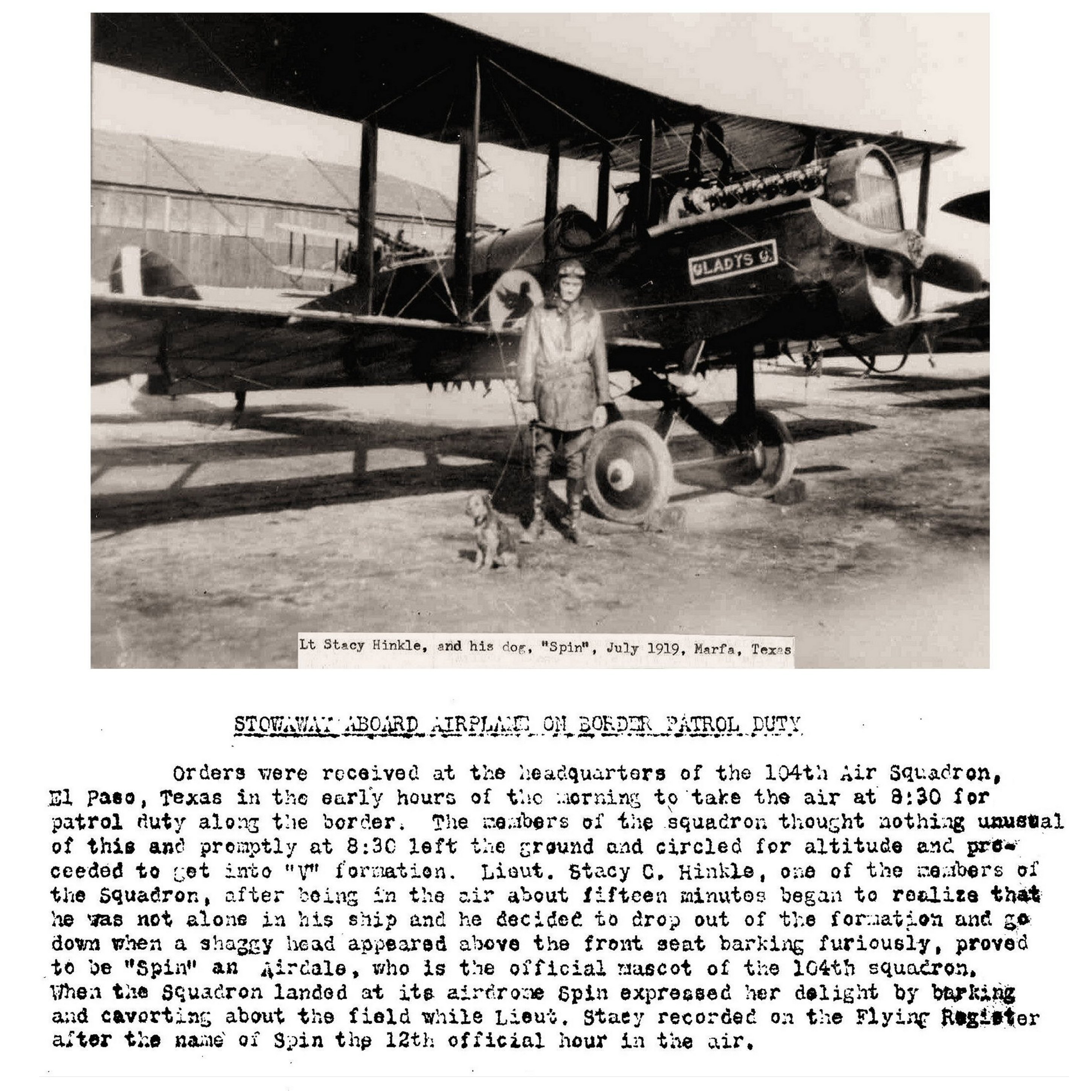
Squadron McAllen and Laredo, Texas, 90th Squadron
Eagle Pass and Sanderson, Texas, 104th Squadron Marfa and
El Paso, Texas, 12th Squadron Douglas and Nogales,
Arizona .
*Aviation
in the US. Army,1919-1939
Maurer Maurer
United
States Air Force Historical Research Center


.jpg)